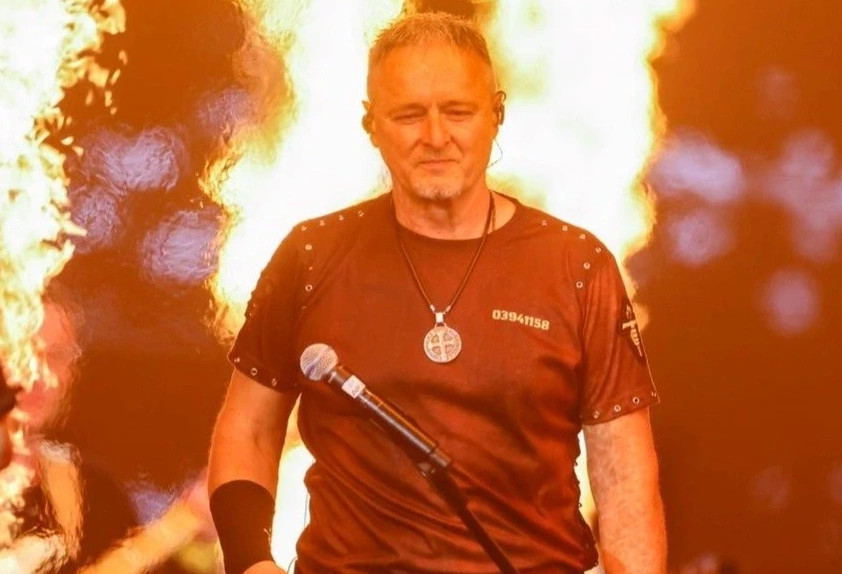
In the wake of concerts that have shaken the region, the famous Croatian singer, Marko Perkovic – Thompson, in a speech at a concert in Sinj, Croatia, has “hit” the opponents of his nationalist songs.
Commenting on the song “Çavoglave” which has historically provoked reactions, Thompson said that the song is free even with a court decision.
“Anyway, we have ‘Yugoslav politicians’ who don’t even recognize the court… But that’s not the point. I just want to say, friends, that this is freedom of expression. The freedom for which our defenders died, fought, shed blood. For us to be free, for us to be free to speak,” he said at Monday’s concert. “But those who want to live in this homeland of ours must respect the Croatian defenders and their symbols. Gentlemen, comrades, Yugoslavia no longer exists. Yugoslavia is dead,” he said, as he was greeted with loud cheers from the audience.
VIDEO:
Poruka Marka Perkovića THOMPSONA (Gosp: drugovi Sugoslavije vise nema 💪🇭🇷✌️ pic.twitter.com/NpcDUV0bEo
— SINOVI 🇭🇷 DOMOVINE (@Sinovi_Domovine) August 4, 2025
Perkovic made international headlines last week after performing in front of half a million people in Zagreb. He is known for his nationalistic songs. One of his most famous songs begins with a greeting, “For the Homeland – Ready,” which was used by the junta regime in Croatia during the Nazi era.
Perkovic, whose stage name is Thompson after the American gun, has said his songs, which many consider controversial and inflammatory, are “evidence of the end of an era.” He said they are linked to the end of Croatia’s war and its declaration of independence from the former Yugoslavia. The 90s war erupted when local Serbs, backed by Serbia, sought to secede from Croatia and unite with Serbia.
Perkovic’s fame in Croatia, as the Associated Press has written, reflects the preservation of nationalist sentiment even 30 years after the war.
Troops called the Ustasa in Croatia killed tens of thousands of Serbs, Jews and Roma in concentration camps across the country. Despite the documented atrocities, some nationalists still see the leaders of the Ustasa regime as the founders of the independent Croatian state.
In Serbia, President Aleksandar Vučić criticized Perković’s concerts, calling them “a display of support for Nazism.” Former Serbian President Boris Tadić said the concert was a shame for Croatia and the European Union because it “glorifies the murder of people from a nation, in this case Serbia.”
Croatia joined the EU in 2013.