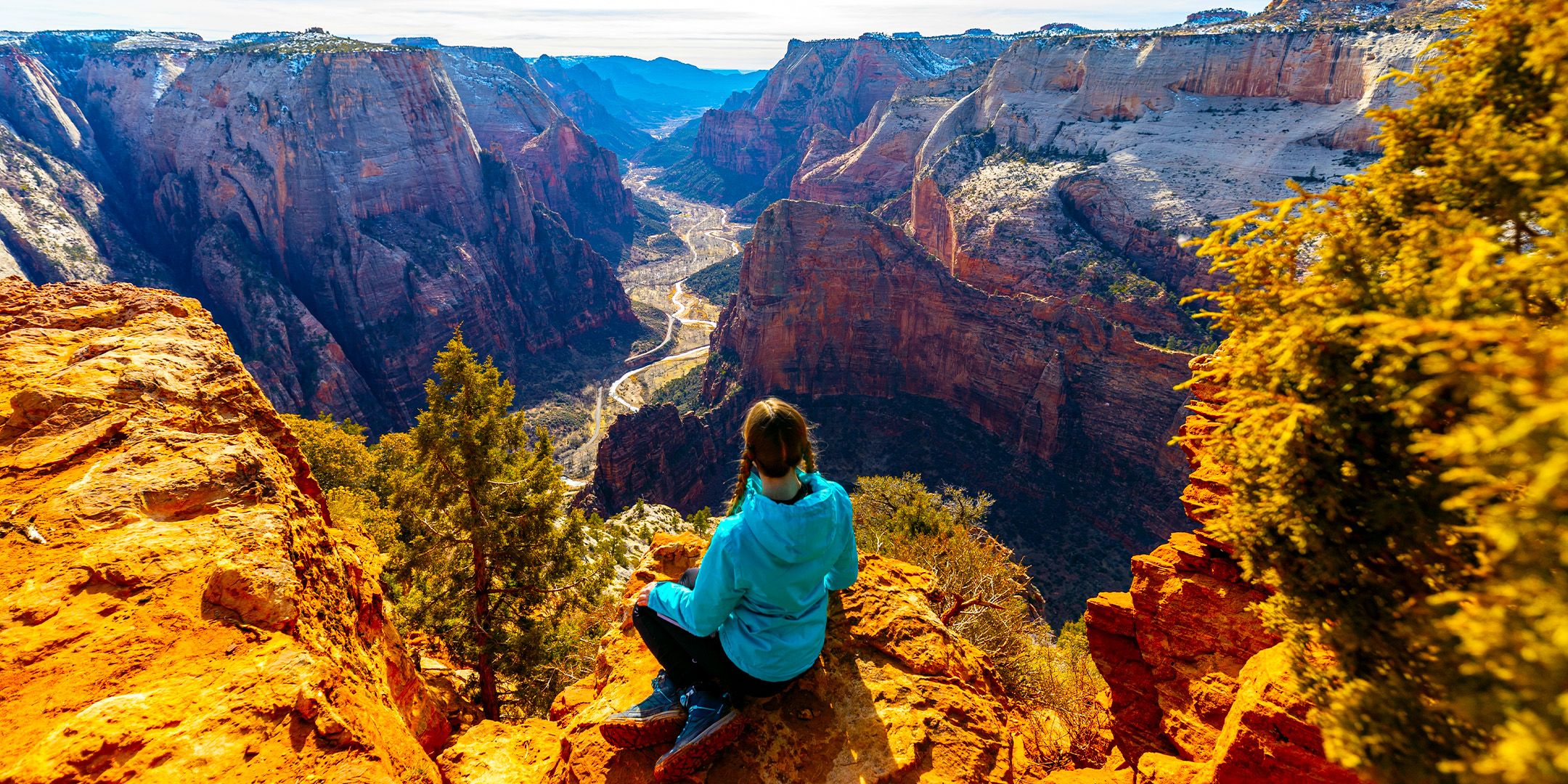
Zion National Park in Utah is home to one of America’s most iconic and most difficult hikes: Angels Landing. But what if you could experience an even higher, safer, and more panoramic view—without the vertigo-inducing drop-offs or the need for a coveted permit? While Angels Landing steals the spotlight, it’s far from the only way to see Zion from above.
That’s exactly what you get when you hike to Observation Point via the East Mesa Trail. Towering over Angels Landing by more than 700 feet, this trail offers one of the most stunning and underrated views in all of Zion, and fewer than 1% of the park’s millions of annual visitors ever make it here.
Best of all, the East Mesa Trail to Observation Point is accessible without the intense elevation gain, chains, or permit system that make Angels Landing so intimidating. It’s a trail that rewards hikers of nearly all levels with big views and minimal stress, making it one of Zion’s best-kept secrets. For those looking to escape the crowds and still experience Zion’s grandeur, this route offers the perfect balance of ease and epic scenery. Here’s everything you need to know to find the trailhead, navigate the route, and experience one of the park’s most unforgettable vistas.
Zion’s Best View That Almost No One Sees
Zion National Park is one of the most visited national parks in the U.S. It’s best known for its popular, easier hikes, like the Pa’rus Trail, and for having America’s most dangerous hike, Angels Landing.
While Angels Landing grabs the spotlight and the crowds, Observation Point quietly delivers a view that is even more spectacular, with far less chaos. From its lofty perch at 6,508 feet, Observation Point looks down on the winding Virgin River and the entire Zion Canyon, including Angels Landing itself. It’s an unbeatable vantage point that few ever witness.
The reason? Most visitors don’t venture to Zion’s quieter east side, where the East Mesa Trail begins. While Angels Landing requires a time-specific permit and features nerve-wracking chain sections, the East Mesa Trail offers a peaceful, non-technical route through shaded ponderosa pine forests, ending in a panoramic payoff that rivals anything in the park.
Unlike the grueling 2,000-foot climb from the canyon floor that once led to Observation Point (via the now-closed East Rim Trail), the East Mesa Trail has minimal elevation change. It’s a gentle hike that feels more like a long nature walk than a summit slog. At nearly seven miles round trip with only 300 feet of elevation gain, it’s manageable for most hikers, including families.

- Population
-
3.338 million (2021)
- Founded Date
-
January 4, 1896
Hiking Zion’s Hidden Gem: The East Mesa Trail To Observation Point
Getting to the East Mesa Trailhead feels like a mini-adventure in itself. Located on the Upper East Side of Zion National Park, the trailhead is accessed by driving past Zion Ponderosa Ranch Resort and continuing about three miles on a rough dirt road. This stretch can become muddy or even impassable after rain or snow, so it’s essential to check current conditions before you go. A 4WD vehicle is highly recommended when the road is wet.
Designated parking spaces are available at the trailhead, but be aware that the surrounding land is private property. Parking outside the marked area or ignoring signage could result in your vehicle being towed—so be sure to follow posted rules. There are no alternative parking options nearby, so arriving early is your best bet for securing a legal spot.
If you’d rather skip the hassle of parking altogether, several local shuttle services—like Zion Guru—offer transportation to remote trailheads throughout the park. However, be sure to confirm whether they also provide return pickups, as not all services include transportation back. If you’re staying at the nearby Zion Ponderosa Ranch Resort, take advantage of their convenient shuttle to the East Mesa Trailhead, which makes getting to the hike especially easy.
Bring bug spray. Also, pack water, snacks, and wear sturdy hiking shoes. There’s no water or restrooms at the trailhead.
From the trailhead, it’s roughly a 6.8-mile round trip to Observation Point. The first 2.5 miles are a peaceful walk through a quiet pine forest. While the landscape remains relatively consistent, the trail offers welcome shade and a sense of calm. As you approach the final mile, the forest opens up to dramatic canyon views.
Observation Point Trail Snapshot:
- Distance: 6.8 miles round trip
- Elevation Gain: 300 ft (91 m)
- Time: 2.5–3.5 hours
- Trail Type: Out and back
- Difficulty: Moderate
- Highlights: Panoramic views, pine forest, solitude, no permit required
East Mesa Trail: Summary of What to Expect
- Forest Hiking: Quiet and mostly shaded in a ponderosa pine forest
- Mild Terrain: Sandy and slightly rocky, but never steep
- Kid-Friendly: Suitable for families with children who can handle longer distances
- Photographer’s Dream: Ideal sunrise and sunset spot with epic canyon views
- Remote Feel: Far from Zion’s tourist-heavy trails
At the overlook, you’ll be rewarded with one of Zion’s most awe-inspiring panoramas—including a direct view of the narrow spine of Angels Landing far below.
When To Visit Zion And Hike The East Mesa Trail

Zion National Park is open year-round, but the best time to hike the East Mesa Trail is from late spring through fall, particularly May to October. During these months, the trail is typically free of snow, and the access road is passable in dry conditions. Late spring and early fall are especially ideal, with cooler temperatures and fewer crowds.
However, summer can be extremely hot in Zion Canyon, with temperatures reaching over 100 degrees Fahrenheit. But thanks to the higher elevation of East Mesa, temps along this trail tend to be more manageable. Early morning hikes are still recommended in summer to beat the heat, avoid afternoon thunderstorms, and catch the best light at Observation Point.
Avoid winter and early spring unless you’re prepared for snow and potentially impassable roads. The dirt access road past Zion Ponderosa is not plowed in winter, which could add nearly six extra miles of snowshoeing round trip. In early spring, snowmelt and runoff can lead to muddy, icy, or even dangerous trail conditions, making extra preparation and caution essential for a successful and safe visit.
Summary Of Seasons
|
Season |
Trail Conditions |
|---|---|
|
Spring |
Snow, mud, inaccessible roads |
|
Summer |
Muddy early, improving by May |
|
Fall |
Hot, but cooler than Zion Canyon |
|
Winter |
Dry, cool, excellent conditions |
If you want to experience the grandeur of Zion National Park without the chaos, crowds, or cliffside anxiety of Angels Landing, Observation Point via the East Mesa Trail is the way to go. With epic views, peaceful terrain, and accessibility that doesn’t require a permit or peak fitness, it’s truly one of Zion’s best-kept secrets. So, skip the steep hiking trails in Zion National Park and enjoy this moderate hike with a gradual climb and spectacular views.