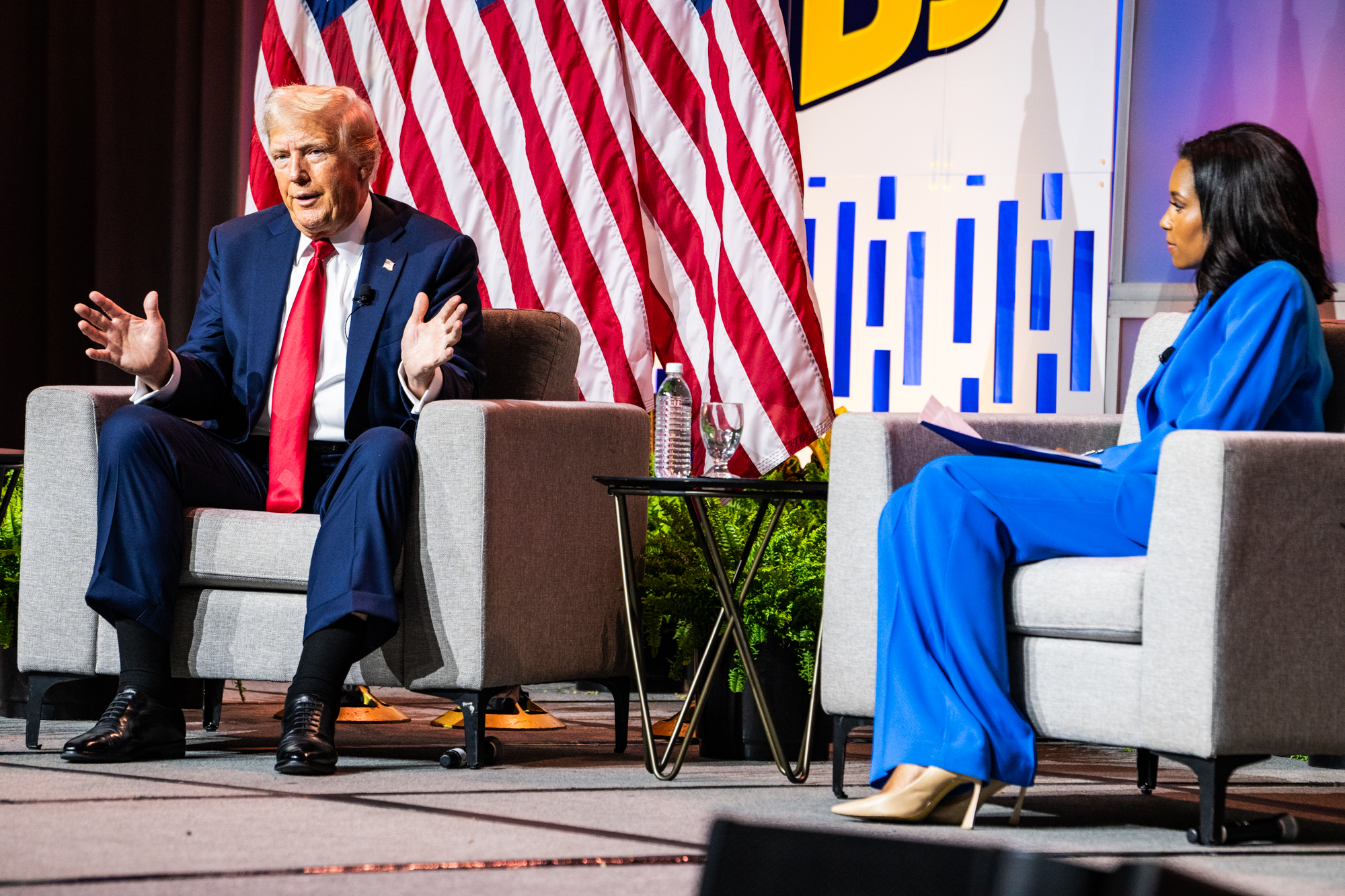
CHICAGO — President Donald Trump on Monday said he was deploying the National Guard to fight crime in Washington, D.C. — and hinted that Chicago and other major cities could be next.
But Gov. JB Pritzker dismissed claims that the federal government has the authority to send troops into Chicago, while likening the Trump Administration’s actions to those undertaken in Nazi Germany.
Flanked by Attorney General Pam Bondi and Secretary of Defense Pete Hegseth at a press conference Monday, Trump said he was sending the National Guard to Washington to “rescue our national’s capitol from crime, bloodshed, bedlam and squalor and worse.”
He also ordered a federal takeover of the Metropolitan Police Department, D.C.’s police force.
Continuing on in his remarks, Trump said Democrat-led cities like New York, Los Angeles and Chicago could also see a similar response — even though each of them, as well as D.C., have recently seen a significant decline in violent crime.
Trump also blasted Mayor Brandon Johnson and Pritzker as “incompetent.”
“It’s going to go pretty quickly. And if we need to, we’re going to do the same thing in Chicago, which is a disaster,” Trump said. “We have a mayor there who’s totally incompetent. He’s an incompetent man, and we have an incompetent governor there — Pritzker is an incompetent.”
After a spike in homicides, robberies and other violent acts during and after the COVID-19 pandemic, Chicago has seen a decline in most crime this year, according to city data.
Through Aug. 9, Chicago has reported 246 murders, down from 359 during the same period in 2024, according to a city dashboard. The city has also seen a 32 percent decline in robberies and a 39 percent drop in shootings.
Speaking during an unrelated press conference on Monday, Pritzker rejected Trump’s legal authority to send troops to Chicago or other American cities, citing the federal Posse Comitatus Act that limits federal troops from engaging in civilian law enforcement.
“He has absolutely no right, and no legal ability, to send troops into the city of Chicago. And so I reject that notion,” Pritzker said.
Since Washington D.C. is not a state, the federal government can exercise additional authority over its police and other affairs, according to the Washington Post.
Asked by a reporter what would happen if Trump flouts the law to mobilize the National Guard or sends other troops to Chicago, Pritzker cited an ongoing court case challenging the Trump Administration’s decision to send thousand of National Guard troops, and hundreds of Marines, to Los Angeles in June during protests over immigration raids.
That deployment was initially ruled illegal, but later allowed to continue by an appeals court. Most troops have since left the city, according to the New York Times.
“What I can say is, it’s clear to me and to most legal experts that he just does not have the right or ability to do it,” Pritzker said. “Having said that…the Nazis in Germany, in the ’30s, tore down a constitutional republic in just 53 days. It does not take much, frankly, and we have a president who seems hell bent on doing just that.”
Pritzker has become one of Trump’s biggest critics as the Illinois governor ponders his own run for president in 2028. Last week, he welcomed Democratic lawmakers from Texas to Illinois who had fled their state to deny a quorum to Republicans seeking to approve new congressional maps.
Johnson has also criticized Trump and his policies during practically every press conference and interview he’s given since January.
In a statement issued Monday, Johnson said Trump “spread misinformation” about crime in Chicago, and called on his administration to restore anti-violence funding and other programs that impact major cities.
“If President Trump wants to help make Chicago safer, he can start by releasing the funds for anti-violence programs that have been critical to our work to drive down crime and violence. Sending in the national guard would only serve to destabilize our city and undermine our public safety efforts,” Johnson said.
Listen to the Block Club Chicago podcast: